You can't afford to continually repair parts when they come out of the mold full of "color flairs". When pigments are simply ground
but not treated, they can still absorb atmospheric moisture and produce pigment agglomerates in your mix. To prevent this, all of
our pigments are mechanically ground down to a "cosmetic grade" particle size to assure uniform and complete dispersion. They are
then dried and surface treated with a special "hydrophobic" (anti-moisture) chemical designed to repel any water they may later come
into contact with.
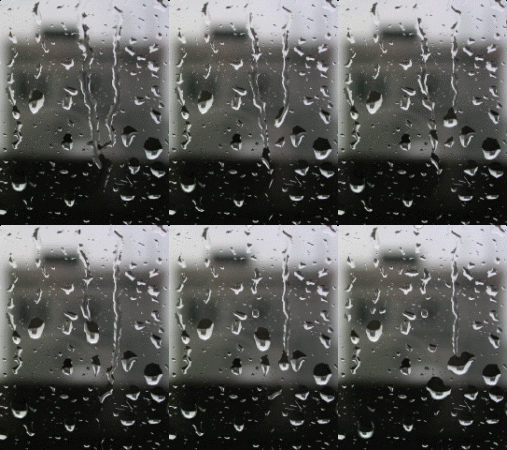
A good way to understand what happens in your mix is to visualize what happens to your automobile windshield on a rainy day. As drops of water land on the glass, the surface tension of each bead of water causes small drops to join together into much larger beads when they come into contact with each other.
Water acts pretty much the same way in your mix. If the dry pigment you're using has moisture on it's surface then the individual pigment particles will want to stick together as they come into contact with each other. This contributes to the formation of large color pigment agglomerates or specks. By sealing the surface treatment onto our pigments, each particle is protected from outside humidity and eliminates a lot of problems in your shop. You know that large raw untreated pigment particles can cause "flairs", color streaks and overall poor color dispersion in your finished parts.
After applying our surface treatment, we seal every container "air tight" in our plant. We do this because open pails of pigment can absorb atmospheric humidity, and it's this moisture that makes dry pigments tend to "lump up" in the first place.
WHY BROCOM DESIGNER COLORS ARE BETTER.
Pigments and Moisture
Pigments and Moisture
Double-click here to edit the text.